
K–5 Literacy Overview
Lincoln Learning Solutions’ K–5 English Language Arts curriculum is built on the Science of Reading, a research-based approach that helps students become confident, skilled readers and writers. The curriculum teaches literacy in a clear, step-by-step way, ensuring students build strong foundational skills and continue developing them as they move through each grade level.
What Students Learn
Students develop literacy skills across several key areas:
- Foundational Reading Skills – Learning letters, sounds, phonics patterns, and decoding strategies to read words accurately.
- Vocabulary Development – Building word knowledge and understanding how words work and relate to one another.
- Reading Fluency – Reading smoothly, accurately, and with expression.
- Reading Comprehension – Understanding, analyzing, and thinking critically about what they read.
- Grammar and Language Skills – Learning conventions that support speaking, reading, and writing.
- Writing Skills – Responding to texts, organizing ideas, and improving written communication.
How Skills Grow Over Time
Kindergarten through Grade 2
- Students build the foundations of reading by learning letter-sound relationships, phonics, spelling patterns, vocabulary, and comprehension strategies.
- Instruction focuses on helping students learn how to read with confidence and accuracy.
Grades 3–5
- Students apply foundational skills to more challenging texts.
- They strengthen vocabulary, fluency, word analysis, critical thinking, and comprehension.
- Reading and writing tasks become more complex as students transition from learning to read toward using reading to learn new information.
What Makes This Approach Effective?
Grounded in the science of reading, structured literacy is an explicit, systematic approach to reading instruction. Instruction is carefully designed so students progressively build literacy skills through learning experiences that are:
- Explicit and clear
- Logically sequenced
- Reinforced through regular review and practice
- Integrated across reading, writing, speaking, and listening activities
- Applied in meaningful, real-world contexts
What Families Can Expect
As students progress through the K–5 program, they will:
- Build strong reading foundations
- Expand their vocabulary and language skills
- Improve reading accuracy, fluency, and comprehension
- Develop confidence as readers and writers
- Be prepared for increasingly complex learning in upper grades and beyond
Structured Literacy Guide Within Learning Objects
View the video to learn about the Structured Literacy Guide within Learning Objects.
Teachers, mentors, and parents can find a Structured Literacy Guide linked at the bottom of any learning object that includes structured literacy components.

The Structured Literacy Guide features the learning object's content overlaid with highlighted instructional boxes to guide your teaching. These correlate with key Structured Literacy elements found in the Learning Object.
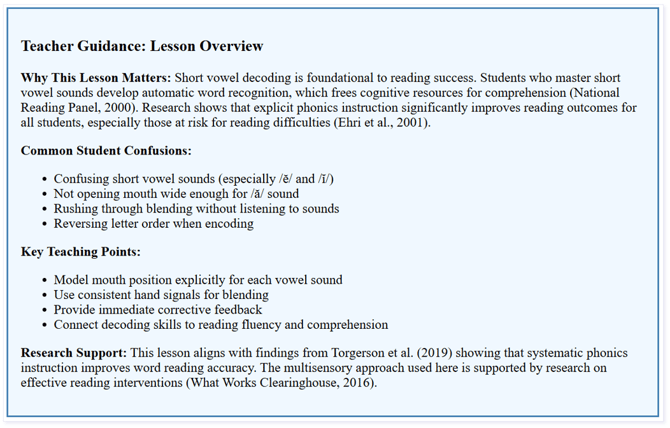
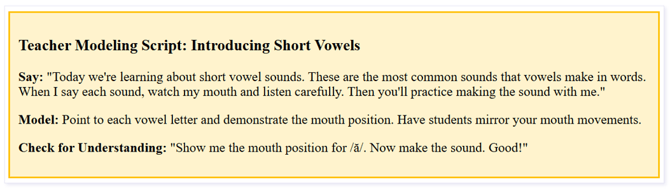
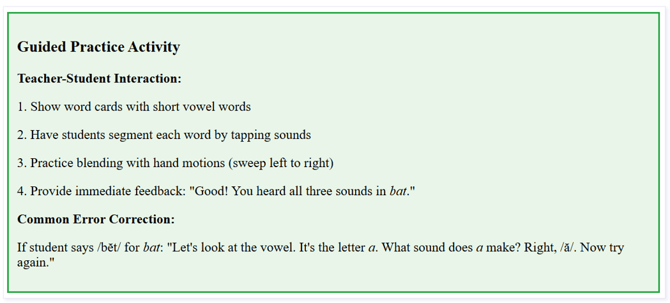
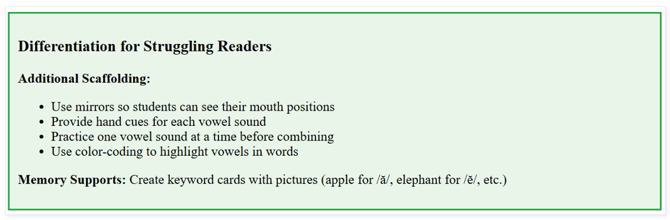
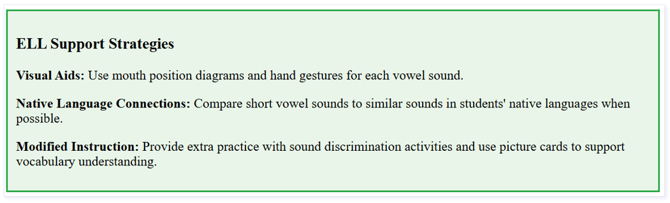
Four types of sections can be found: Teacher Guidance: Lesson Overview, Teacher Modeling Script, Guided Practice and Differentiation and ELL Support.
Lesson Overview
The Lesson Overview explains the lesson’s purpose, identifies common student misconceptions to address, and lists key teaching points for the teacher.
Teacher Modeling Script
Teacher Modeling Scripts provide suggested wording to help teachers introduce concepts, explain key ideas, and guide meaningful discussion about the content.
Guided Practice
Guided Practice sections help teachers engage students in activities and provide corrective feedback when needed.
Differentiation and ELL Support
Guidance on differentiated instruction and support for English language learners within Structured Literacy practices is also highlighted in the guide.
Resource
Literacy in K-5 English Language Arts
Please note, the images that may be found in this resource may not match your screen. This is a Lincoln Learning Solutions product. Access/features may vary based on client contract.
© 2026 Lincoln Learning Solutions. All rights reserved.